 Posted by
 Alexanderplatz is a major square and transport hub in central Berlin. Visitors come for the TV Tower, World Clock, shopping and connections to the historic centre. Its broad paved spaces and postwar architecture tell a different story from Museum Island or Unter den Linden. This guide explains the main sights, what is worth a separate ticket, how to navigate the station and how to use “Alex” as the start of a practical walking route.
At a glance: Alexanderplatz
- Location: Berlin-Mitte, east of Museum Island.
- Main landmarks: TV Tower, World Clock and Fountain of Friendship among Nations.
- Public square: free; TV Tower observation deck and other attractions require tickets.
- Transport: S-Bahn, U-Bahn, trams, regional trains and buses.
- Allow: 30 to 60 minutes for the square, longer for a tower booking or shopping.
Stay near Alexanderplatz
Compare the hotel entrance, station access and room location. The square is convenient for transport but can be busy.
Why visit Alexanderplatz?
It is one of Berlin’s easiest places to recognise and one of its most useful interchanges. The TV Tower rises above the square, and several sights and shopping streets begin nearby. Alexanderplatz is not a preserved old-town square. Much of its present appearance reflects twentieth-century rebuilding and the urban planning of East Berlin. That makes it valuable for understanding another chapter of the city.
Some visitors find the space hectic rather than beautiful. The best way to use it is as a gateway: see the landmarks, then walk towards Nikolaiviertel, Museum Island or the surrounding streets. If you want a high view or a particular shop, give those activities their own time. The station, square and tower entrance are close but not identical locations.

Berlin TV Tower tickets
Check the available time slot, visibility and admission conditions before booking. The existing TV Tower offer on this site is retained as a comparison link.
A short history of the square
The square is named after Tsar Alexander I of Russia, who visited Berlin in the early nineteenth century. It grew as a transport and commercial centre. Alfred Döblin’s 1929 novel Berlin Alexanderplatz gave it a lasting place in literature. War damage and later East German redevelopment changed the area substantially. The present square is therefore a layered place rather than an untouched illustration of Döblin’s Berlin.
During the GDR, Alexanderplatz was a prominent public space in East Berlin. Modernist buildings and the TV Tower helped define its image. In November 1989, a large demonstration on the square became part of the events leading to the fall of the Berlin Wall. The area continued to change after reunification, with retail, transport and construction altering the surroundings. A visit can connect these periods if you look beyond the immediate shops.
Berlin TV Tower
The Fernsehturm is the most visible landmark near Alexanderplatz. Its observation deck provides broad views across Berlin, while the exterior can be appreciated for free from many streets. A tower visit needs a ticket, and availability, admission times and security conditions should be checked for your date. On a cloudy day, distant views may be limited, so consider the forecast if the panorama is the main reason to pay.
The tower was built in East Berlin and remains a striking example of that era’s ambition. It can help orient a visitor across the city: from above, rivers, parks and broad avenues become easier to understand. Yet the deck is not necessary for enjoying the square. If your budget is limited, look at the architecture from below and choose another free viewpoint or museum.

Berlin TV Tower tickets
Check the available time slot, visibility and admission conditions before booking. The existing TV Tower offer on this site is retained as a comparison link.
World Clock and public art
The Weltzeituhr, or World Clock, is a familiar meeting point. Its rotating display and city names reflect an era when a clock could symbolise international connections in a public square. It is easy to see without a ticket. Take a moment to look at the design rather than only using it as a backdrop for a photograph. Because it is a popular meeting place, agree on which side to wait if your group separates.
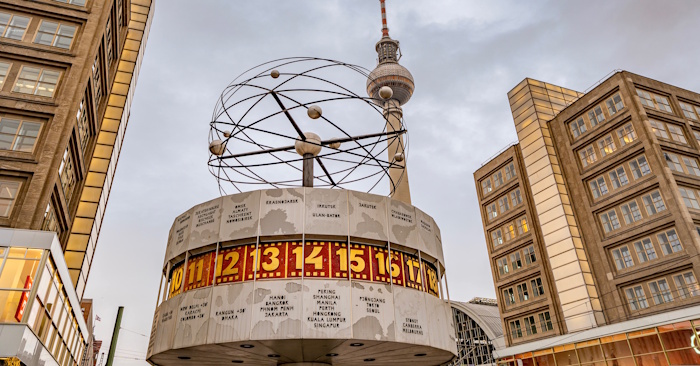
The Fountain of Friendship among Nations is another distinctive feature. Its design and name connect to the GDR-era setting. Like public fountains elsewhere, water operation and maintenance can change by season. The object remains worth noticing even if it is dry. Together with the tower and surrounding buildings, these features give the square a coherent twentieth-century identity.
Shopping around Alexanderplatz
Alexanderplatz has large stores, shopping centres and everyday retail. Individual businesses change, so do not travel across the city solely because an old guide lists a particular chain. Check current store hours, especially on Sundays and public holidays when German shopping rules differ from ordinary weekdays. A food stop or practical purchase can fit naturally into sightseeing here.
Retail crowds are one reason the square feels busy. If you want a quieter atmosphere, walk towards the riverside or a nearby side street after seeing the main landmarks. For independent boutiques, other neighbourhoods may be more rewarding than the biggest square-side stores. Hackesche Höfe offers another style of browsing within a reasonable walk.
Alexanderplatz station and transport
The station connects S-Bahn, U-Bahn, trams, buses and regional services. Entrances and platforms are spread across a large area, so a first-time traveller should allow extra minutes. Check the line number, direction and final destination on the display. The S-Bahn guide and U-Bahn guide explain tickets and zones in more detail. Most central visitor journeys lie within AB, but verify the full route.
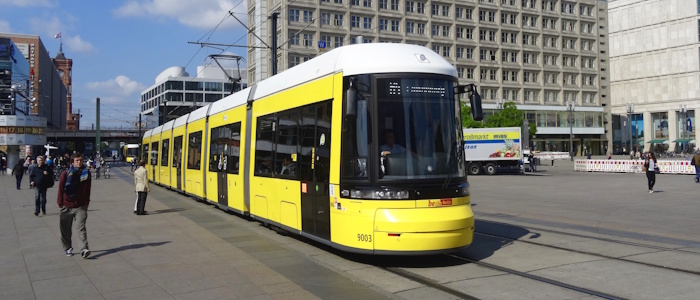
From Hauptbahnhof, a direct rail or U5 connection may be convenient depending on the current service. U5 also links Alexanderplatz with Rotes Rathaus and western central stops. Trams are useful for some northern and eastern neighbourhoods. Do not assume the tram stop is on the same platform as the U-Bahn; follow signs carefully.
A walk from Alexanderplatz to the river
Begin with the World Clock and TV Tower, then head towards Rotes Rathaus and Nikolaiviertel. The small pedestrian quarter contrasts with Alexanderplatz’s broad modern space. Continue to the Spree and Museum Island for riverside views and museums. This route gives a compact introduction to different periods of central Berlin without needing to enter a paid attraction.
If you have more time, continue west along Unter den Linden towards Brandenburg Gate. That becomes a long sightseeing walk with many possible stops, not a quick extension. Split it across two halves of the day if you want museum interiors or a meal. An alternative is to go north to Hackescher Markt and its courtyards.
Visiting the square at different times
Morning is useful for seeing the public art before the busiest shopping period, though individual stores may not yet be open. Midday is lively and practical for errands. Evening brings illuminated buildings and transport activity, but the open square may feel less comfortable in poor weather. Choose based on whether you want photos, retail or a TV Tower booking.
Seasonal markets and events can alter walking routes and crowds. Check the official event calendar if a particular festival is important. A square is not a ticketed museum with a fixed visitor path; you can return briefly at another hour if your first stop is too busy.
Accessibility and practical safety
Alexanderplatz is a large, busy transport environment. Keep valuables secure and be aware of trams, bicycles and crossings while looking up at the tower. Families can agree on the World Clock or another clear landmark as a meeting point. Station lifts and escalators may be temporarily unavailable; consult live accessibility notices if step-free travel is needed.
Large paved surfaces can feel hot in summer and exposed to wind in winter. Take a break in a nearby indoor space rather than pushing through a long itinerary when conditions are uncomfortable. Public seating may be busy. The square works best as one part of a wider walking route, not necessarily the place to spend an entire afternoon.
What not to confuse
The TV Tower is near Alexanderplatz, but its entrance and ticket process are separate from the open square. The Berlin Story Bunker is elsewhere; it should not be confused with a historic bunker at Alex. The bunker guide explains that distinction. Museum Island is a walk away, not directly on the square. Setting each precise destination in your map prevents a rushed wrong turn.
Alexanderplatz is a transport hub as much as a sightseeing area. A hotel advertised as “near Alexanderplatz” may have excellent links, but inspect the exact street and noise conditions. Convenience and atmosphere are separate questions.
Stay near Alexanderplatz
Compare the hotel entrance, station access and room location. The square is convenient for transport but can be busy.
Using Alexanderplatz as a meeting point
The square is large and busy, so “meet at Alexanderplatz” is too vague. Choose a specific exit, landmark or shop entrance and share it with your group. There may be temporary construction, markets or events that change the usual flow. If arriving on different trains, agree on a time and an exact point outside the station. This simple detail avoids a frustrating search in a crowd.
Public transport signs can lead to different levels. A friend exiting the U-Bahn may not see someone waiting beside the S-Bahn entrance. The live map can help, but a recognisable physical landmark is more reliable when phones lose signal underground. If separated, do not move repeatedly between meeting points; agree in advance who stays put.
What to do with limited time
With half an hour, walk across the square, look at the World Clock and TV Tower from outside, and locate your next connection. With two hours, add a walk toward the Red Town Hall and Nikolaiviertel or reserve a timed visit to the tower. The tower view is weather dependent and requires a separate ticket; do not assume the observation deck is part of a free square visit.
For a full afternoon, combine one attraction with a neighbourhood walk and a meal. Alexanderplatz itself is more of a transport and urban focal point than a leafy place to linger all day. Grouping nearby stops makes the visit feel coherent. The streets toward Museum Island, Nikolaiviertel and the Spree each offer a different view of the centre.
Reading the architecture
The square’s layered buildings reflect different eras of Berlin, especially twentieth-century redevelopment. Notice the contrast between broad traffic spaces, the television tower and older streets a short walk away. It is more interesting when viewed as an urban crossroads than as a single postcard composition. Street works and retail change the scene, so an older photograph may not match your arrival.
Use the tower as a visual orientation point, but do not mistake seeing it for being close to your destination. At street level, follow the actual pedestrian crossings and station exits. For photography, step out of the traffic flow and give other travellers room, especially at the station entrances.
Food, shopping and weather
Alexanderplatz has many places to buy food or browse shops, but the immediate square is busy and exposed. If you want a quieter meal, walk a few streets and compare options before choosing. Retail opening patterns can differ on Sundays and holidays. Outdoor markets are seasonal or event based, so confirm dates if a market is central to your plan.
Rain or wind can make the open square less comfortable than nearby streets. A covered station or museum can provide a pause, but do not linger in the flow of commuters. In sunny weather, the television tower can help orient you across a wider walk, while its observation view still depends on visibility.
Frequently asked questions
Is Alexanderplatz free to visit?
Yes. It is a public square. The TV Tower and some nearby attractions require separate tickets.
How long do I need?
Half an hour to an hour for the square’s main landmarks; allow longer for shopping or the tower.
Is it the old town of Berlin?
No. Its present appearance reflects substantial twentieth-century rebuilding. The reconstructed Nikolaiviertel is a nearby historic-core area.
Which station serves it?
Alexanderplatz is a major S-Bahn and U-Bahn interchange with tram and other connections.
For an easy final orientation check, identify the station entrance you will use for your return journey before walking toward another district. The square is broad, and several lines leave from different levels. A few minutes with the live route planner can save a long search after dark or in bad weather.