Wannsee is both a Berlin district and the name of a well-known lake area in the southwest of the city. Berliners come here for the Strandbad swimming beach, boat trips, walks and trips towards Potsdam. Visitors can also explore important historical sites nearby, including the House of the Wannsee Conference. This guide separates the different destinations, explains how to reach them and helps you plan a day that fits your interests.
At a glance: Wannsee
- Main choices: swimming at Strandbad Wannsee, a lake cruise, a walk or a historical visit.
- Transport gateway: S-Bahn Wannsee; individual destinations require onward travel or a walk.
- Best swimming period: the managed beach’s season and current opening dates.
- Boat tours: several routes cross the Havel lakes; check the exact pier and itinerary.
- Allow a half-day for one activity or a full day to combine several stops.
What exactly is Wannsee?
The Großer Wannsee is a broad bay in the Havel water system. Nearby Kleiner Wannsee is a separate, smaller stretch of water. The name Wannsee also refers to the surrounding district and its S-Bahn station. These points are not identical: arriving at the station does not place you directly on the swimming beach or at the House of the Wannsee Conference. Check the address of the attraction you want rather than navigating only to “Wannsee.”
The lake landscape offers a marked contrast to Berlin’s central Spree. Here the water is broad, the shores more wooded and villas appear along parts of the banks. Sailing and passenger boats use the area. The connection towards Potsdam and the adjoining lakes makes Wannsee a useful starting point for a longer excursion. The area is not one compact attraction that can be covered in a ten-minute stroll.
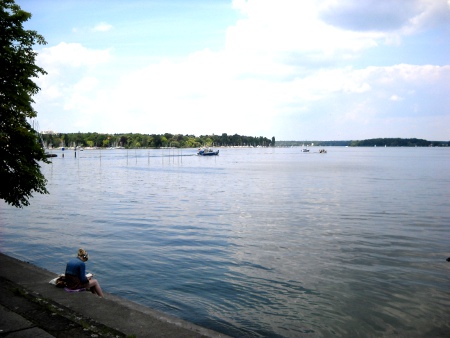
Swimming at Strandbad Wannsee
Strandbad Wannsee is Berlin’s famous managed lakeside beach. Its long sandy shore and bathing facilities make it a summer destination rather than just a place to look at the water. Admission, seasonal dates, opening hours and available facilities should be checked with the operator before your visit. The beach can be busy during hot weekends and school holidays; arriving earlier gives you more flexibility. Do not assume that every shore around the lake is a public swimming area.
Swimming conditions depend on current water quality, weather and safety notices. Follow lifeguard information and marked areas. Families should keep an eye on children even where the water appears calm, and boating traffic belongs outside designated bathing zones. Bring sun protection, water and suitable footwear. A beach day can be relaxing, but it is quite different from a sightseeing cruise or a quick station stop.
From S-Bahn Wannsee, use the relevant onward bus or walking route to the Strandbad. The distance is enough to matter on a hot day, particularly with bags or children. A live route planner will show the best connection and any service changes. If you intend to combine swimming with another destination around the lake, compare the travel time between them rather than assuming they share an entrance.
Boat trips on Wannsee and the Havel
Passenger boats offer a comfortable way to see the broad lake and adjoining waters. The well-known seven-lakes route focuses on scenery, wooded banks, villas and some views towards the Potsdam area. It is not a central Berlin cruise past Museum Island or the Reichstag. Check the duration, whether the vessel returns to its starting point and the exact embarkation address near S-Bahn Wannsee. Our boat tour comparison explains how this excursion differs from a short Spree ride.
Some trips allow stops along the route, while others are sold as continuous round trips. Never assume hop-on, hop-off travel unless your ticket explicitly permits it. Schedules can be seasonal and departures less frequent than in central Berlin. If you plan to visit a garden or historic site along the way, first check the return sailing and any separate admission. Wind on the open water can feel cool even on a bright day.
Explore Wannsee by boat
Compare the route and timetable for your travel date. The older seven-lakes offer on this site can be checked alongside other Berlin cruises.
House of the Wannsee Conference
The House of the Wannsee Conference is a memorial and educational site in a villa on the lake. On 20 January 1942, senior Nazi officials met there to coordinate the persecution and murder of Europe’s Jews. The exhibition explains the meeting in the context of the Holocaust and the wider Nazi apparatus. This is a serious historical visit, not a scenic stop to be treated as a casual photo opportunity.
Check the memorial’s current opening hours, admission arrangements and educational resources before travelling. Allow time to read the exhibition carefully and approach the subject respectfully. The villa is not directly beside the Strandbad or the S-Bahn platform, so plan the route separately. Families may want to consider the age and preparation of children. If you are making a full-day Wannsee trip, a memorial visit and a later lakeside walk can be combined, but give the exhibition the time and attention it merits.
Pfaueninsel and other nearby outings
Pfaueninsel, or Peacock Island, lies in the Havel area and offers a different landscape of parkland and historic structures. It is reached by a separate ferry after travelling from Wannsee towards the landing. The island is car-free and has its own access conditions, ferry times and potential conservation restrictions. Check current information before going; it is not simply an extension of your Wannsee boat-tour ticket.
Potsdam is another possibility from the Wannsee transport corridor. Its palaces and parks deserve substantial time, so combining a full Potsdam visit with Strandbad Wannsee and a long boat tour in one day is too ambitious for most travellers. Choose a main objective. If you want both water and palaces, a cruise with views towards Potsdam or a short waterside stop may be enough; save the palace interiors for another day.
Walks in the wider forest and lakeside landscape can be rewarding, but routes may be longer than expected. Some shoreline belongs to private properties or protected areas. Follow public paths and check distance and return transport before setting off. A route from the station to a particular viewpoint may not track directly along the water.
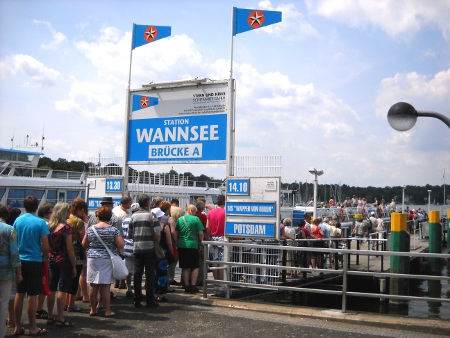
How to get to Wannsee from central Berlin
S-Bahn Wannsee is served by lines connecting it with central and western Berlin, including routes towards Potsdam. Regional trains may also be useful for some journeys. Service patterns can change, so use a current BVG or VBB journey planner. From Berlin Central Station, compare rail options for your chosen time. The relevant ticket zone depends on your full journey, particularly if you continue beyond Berlin to Potsdam.
At the station, decide whether you are heading to a boat pier, the beach, the memorial or onward to Pfaueninsel. These are different directions and may need buses or a further walk. A printed ticket or booking confirmation should give the exact address. If you have limited walking ability, check the whole trip, not just whether the train station has a lift.
A sensible day plan
For a warm summer day focused on swimming, travel directly to Strandbad Wannsee and spend several hours there. Add a short meal or walk only if you still have energy. For a sightseeing day, reserve a lake cruise, arrive early at the pier and use the rest of the day for a single nearby stop. For a history-focused day, visit the House of the Wannsee Conference first, then take a quiet walk with enough time to reflect before returning to the centre.
Each of these plans avoids wasting time crossing repeatedly between scattered destinations. The lake area is spacious, and transport may be less frequent at the edges than in Berlin-Mitte. In poor weather, a museum or memorial visit is more dependable than a long open-water excursion. The Nikolaiviertel and Museum Island are central alternatives when you do not want a lake day.
Where to stay for a Wannsee trip
A base near a good S-Bahn connection often works better than moving hotels for one lakeside day. If you plan several outings around the Havel, compare accommodation in the southwest.
Walking and cycling around the lakes
The Wannsee district is attractive for a walk, but the shoreline is not one uninterrupted public promenade. Villas, private grounds, wooded routes and boat facilities shape access. Choose a named public path or destination, measure its length and note your return bus or rail stop. A route towards Pfaueninsel has a different character from a short walk between the station and a cruise pier. If you would like an easy outing, start with a short waterside section and extend it only after seeing conditions on the ground.
Cyclists can connect the lake area with forest routes and parts of the Berlin Wall Trail. These rides require more planning than a casual city-centre cycle, especially if you intend to cross by ferry or continue to Potsdam. Check whether a particular boat accepts bicycles and whether your public transport ticket covers taking one on the train. On shared paths near bathing areas, ride slowly and give pedestrians space.
Choosing the right season
Summer is the obvious time for a beach day, but it is also when the area is busiest. A warm weekday can be more comfortable than a hot weekend. Spring and autumn suit walking and sightseeing cruises, with the caveat that schedules may be thinner than in peak season. Winter brings a quieter landscape and can work for a memorial visit, though a long exposed boat ride may be unavailable or unpleasant. Check daylight hours when planning a late return from a wooded path.
Weather changes the experience more than in central Berlin. Wind over open water makes a boat deck cooler; a thunderstorm can disrupt swimming plans. Keep a flexible indoor alternative and do not buy a non-refundable product simply because an old article describes the area as a guaranteed sunny-day attraction. The House of the Wannsee Conference requires a different frame of mind from a beach outing and can be visited in less favourable weather.
What to pack for a day trip
Bring water, weather protection and comfortable shoes even if your main activity is a cruise. The journey between station, pier and individual attractions can involve more walking than expected. For swimming, pack the items needed by the managed beach and read its house rules about lockers, food or equipment. For a memorial visit, plan a quiet period afterwards rather than squeezing it between two rushed entertainment bookings.
Keep a current transport map and the exact destination address available offline in case mobile coverage or battery becomes a problem. If several people are travelling together, agree whether the priority is beach, boat, history or a long walk. Wannsee offers all four, but trying to treat them as one tightly packed attraction can make the day feel like commuting between stops.
Frequently asked questions
One final planning point: the term “Wannsee” on a rail timetable is a station name, not a promise that every attraction is nearby. Save the addresses of your chosen stops before you leave central Berlin. That small step makes a lake day much easier. It also helps when a boat leaves from a different landing than the one you used on a previous visit.
Is Wannsee a lake or a district?
Both. Großer Wannsee is part of the Havel water system, and Wannsee is also the name of the surrounding Berlin district and rail station.
Can I swim anywhere along the shore?
No. Use a suitable designated bathing area and check current safety and water-quality notices. Strandbad Wannsee is the best-known managed beach.
Is the boat pier at the station?
Jetties are nearby but not on the platform. Follow the precise address and allow walking time.
Can I visit Potsdam on the same day?
Yes, but prioritise. A full Potsdam palace visit plus a beach afternoon and a lake cruise would make a very crowded schedule.