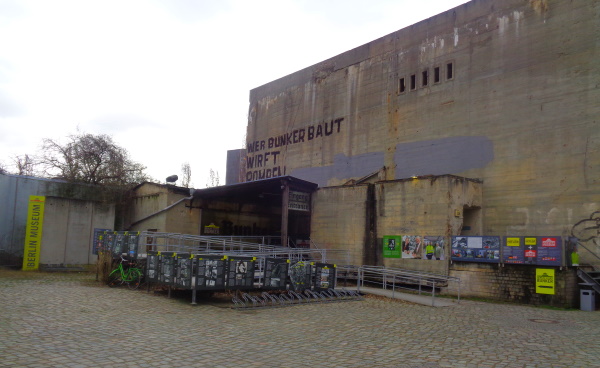
The Berlin Story Bunker is a museum in a former Second World War air-raid shelter near Anhalter Bahnhof. Its exhibition examines Nazism and Adolf Hitler’s rise to power. It is not the original Führerbunker where Hitler spent his final days in 1945. The two sites are in different locations and serve different purposes today. This guide explains that distinction, the museum’s subject matter, ticket planning and how to visit with appropriate historical context.
- Location: near Anhalter Bahnhof in a former air-raid shelter.
- Focus: exhibitions on Berlin history and Nazi dictatorship.
- It is not the historic Führerbunker site near the former Reich Chancellery.
- Allow several hours if you intend to read the extensive exhibition carefully.
- Check current admission, languages and opening hours with the museum.
The essential distinction: two different bunkers
The name “Hitler bunker” has been used confusingly in tourist articles. The Berlin Story Bunker is a public museum housed in a wartime shelter. Its exhibition about Hitler and National Socialism is an interpretive presentation. The Führerbunker was the bunker complex associated with Hitler’s final days beneath the former government area. Visitors cannot buy a ticket to walk through that original complex. Its location is marked by historical information in an ordinary urban setting.
Make this distinction before choosing a tour. If you want an extensive museum exhibition, the Berlin Story Bunker is relevant. If you want to understand the site of Hitler’s death and the end of the regime, seek sober historical interpretation of the former Führerbunker location and the surrounding Nazi government district. A product title that combines both words may cover only one of these experiences.
What does the Berlin Story Bunker present?
The museum’s major documentation asks how Hitler and the Nazi regime could rise, govern and commit crimes. The setting in a former shelter adds physical atmosphere, but the historical explanation rests on documents, images and interpretation rather than on a claim that Hitler lived there. Check the current exhibition route and any temporary sections on the museum’s official site. Rooms and admission products can change.
A thorough visit can take much longer than a quick attraction stop. The subject is difficult, and reading continuously can be emotionally demanding. Take breaks where permitted and allow yourself to leave if needed. A short visit may provide an overview, but do not promise yourself that you will absorb an extensive exhibition in half an hour.
How to approach the history responsibly
An exhibition about a dictator should centre the mechanisms of dictatorship, persecution, war and genocide, not fascination with the individual alone. Read how propaganda, violence, institutions and cooperation enabled Nazi rule. Pay attention to the people targeted and harmed. Berlin has many sites of remembrance; this museum can form one part of a wider learning itinerary rather than the only source on the period.
Use language carefully. The Führerbunker was not a heroic final refuge, and the deaths there should not eclipse the immense human suffering caused by the regime. Historic photographs and objects can be powerful, but their significance depends on context. A good visitor question is “what does this display explain?” rather than “how dramatic is this room?”
Where was the original Führerbunker?
The former Führerbunker site lies in central Berlin near the area of the old Reich Chancellery, now surrounded by ordinary streets and buildings. An information board explains its history. The subterranean complex is not an accessible tourist attraction. Its low-key marking is deliberate: the place is documented without turning it into a shrine. Check a current map for the memorial board rather than expecting a large museum entrance.
The site can be included in a walk through the former government district and nearby memorials. Keep the tone respectful and avoid treating a residential car park or pavement as a stage for theatrical photographs. It is possible to learn about the final days of the war without entering underground spaces. For a wider picture, include institutions that document Nazi crimes and their victims.
Tickets, hours and languages
The Berlin Story museum publishes current admission and opening times. Older prices and claims about exact room numbers in travel articles can be outdated. Check what a ticket includes and whether a separate audio guide or combination offer is available. If you need English interpretation, confirm that the current exhibition and audio product meet your needs.
Booking online can be practical on a fixed day, but compare cancellation conditions and final prices. The existing GYG product below remains as a comparison link. It refers to the exhibition at the Berlin Story Bunker, not entry to the inaccessible original Führerbunker. This distinction should remain explicit in both a promotional box and the surrounding text.
Check current admission, language and the exact museum address. This ticket is for the museum exhibition, not the original Führerbunker.
Compare Berlin Story Bunker tickets · Browse other Berlin history tours
How to get to the museum
Use the Berlin Story Bunker address near Anhalter Bahnhof in a live public transport planner. The museum is not at Alexanderplatz and not at the former Führerbunker site. From Berlin Central Station, compare S-Bahn and other routes for your day. If you are combining the museum with the original site, plan the walk separately and allow time to read information along the way.
The Anhalter Bahnhof area has its own history of war and division. A museum visit can be paired with a walk towards Potsdamer Platz or Topography of Terror. Do not rush from one difficult historical exhibition to another without a break. The geography is central, but the subjects require attention.
Other important Nazi history sites
The Topography of Terror documents Nazi institutions at a former headquarters site. The Memorial to the Murdered Jews of Europe addresses the Holocaust through a different form of remembrance and an information centre. Other memorials focus on specific groups persecuted by the Nazis. Choose a route that allows time for reflection and does not reduce each place to a photograph.
The Reichstag adds a different perspective on the collapse of democracy in 1933 and the later reconstruction of democratic institutions. Checkpoint Charlie concerns the Cold War and divided Berlin, a later period that should not be merged with Nazi history simply because both appear in a city tour.
Visiting with children and teenagers
Graphic material and difficult historical themes may not suit every child. Check the museum’s age recommendations and discuss the visit beforehand. Teenagers studying the period can benefit from a structured exhibition if they have time to ask questions afterwards. A rushed adult itinerary with several grim sites in succession may overwhelm younger visitors.
Explain why the museum is in a real wartime shelter while the exhibition is not inside Hitler’s own bunker. This factual distinction helps prevent sensational misunderstanding. When leaving, ask what the displays taught about institutions, victims and choices rather than focusing only on the physical room.
How much time should you allow?
Allow several hours if you plan to read the main documentation carefully. A shorter visit is possible, but prioritize sections rather than hurrying through every room. Build in transport, check-in and a break afterwards. If a guide or timed product has a defined length, confirm whether you can continue independently after it ends.
For a history-focused half-day, choose the museum and one nearby outside site. A full day can include Topography of Terror or a memorial, with food and rest between them. Berlin’s historical landscape is dense; more sites do not automatically make a more informed visit.
Accessibility and visitor comfort
A former bunker can have different spatial conditions from a modern gallery. Check current information on lifts, stairs, seating, ventilation and accessible toilets if any of these affect your visit. Audio guides and display languages may also matter. Wear comfortable shoes and prepare for an extended indoor route. Contact the operator for specific needs rather than assuming every level is accessible.
Photography rules and bag restrictions should be followed. Even where photographs are permitted, avoid images that trivialise victims or turn the historical setting into a costume backdrop. The purpose of documentation is understanding, not spectacle.
Why names and marketing matter here
Search results often use “Hitler Bunker Berlin” for several distinct topics: the original site, a replica, an exhibition or a tour of nearby streets. Read the address and description before paying. A museum in a real Second World War shelter is historically meaningful in its own right, but it should not be presented as a chance to enter the original Führerbunker. Accurate wording helps visitors make informed decisions and respects the history.
The same caution applies to claims such as “largest” or “only” exhibition unless the operator defines them precisely. Judge a visit by its documented content and your interests. If a guide makes a dramatic claim, ask which site or object it refers to.
A well-connected base makes it easier to separate a museum visit from other serious memorials across the city.
How to approach difficult history
The Second World War and Nazi dictatorship require careful interpretation. A museum can show documents and explain decision-making, victims and consequences; it should not turn the subject into a thrill ride. Read captions, distinguish a reconstructed scene from an original object and ask whose perspective is represented. If a display is emotionally difficult, it is reasonable to pause or shorten your visit.
The site’s commercial name can lead visitors to expect the historic bunker beneath the former Reich Chancellery. That expectation is incorrect. Understanding the distinction before buying a ticket prevents disappointment and keeps the history geographically clear. The Berlin Story Bunker is an exhibition venue in a separate former air-raid shelter; the former Führerbunker location is an outdoor historical site without a preserved public bunker tour.
Questions to ask of an exhibition
Look for source dates, provenance and context. How does a photograph relate to an event? Is a quotation from a witness, perpetrator or later historian? How are the experiences of persecuted groups presented? These questions help avoid treating powerful images as self-explanatory. If a claim sounds sensational, seek a reliable museum or memorial source for corroboration.
Different Berlin institutions serve different purposes. A broad historical exhibition, a memorial devoted to victims and a preserved architectural site are not interchangeable. You may want to visit a dedicated memorial or documentation centre as well, leaving enough emotional and practical time between stops. More sites in one day do not necessarily mean better understanding.
Planning the rest of the day
Choose a route based on your capacity for the material. A quiet walk or meal afterwards can be more appropriate than immediately rushing into another dense exhibition. Travelling with teenagers, discuss beforehand why you are visiting and what kind of imagery may be present. Current exhibition guidance can help you judge suitability; age alone is not a complete measure.
Check opening hours and ticket conditions directly before leaving. Temporary displays and interpretation can change. If you seek the historic Führerbunker location instead, research that separately and remember it is not an excavated attraction where you descend into rooms. The distinction is the most important practical fact in this guide.
Tickets, timing and expectations
Confirm current exhibition hours and the nature of the ticket before travelling. Some visitors arrive expecting a small archaeological entrance to the former command bunker and find a substantial modern documentation exhibition instead. Set aside enough time to read, not only to move through the rooms. If your itinerary includes memorials elsewhere, leave a meaningful break.
A guided tour, if offered, may present different emphases from a self-guided visit. Check its language and duration. Neither format can replace primary historical research, but good interpretation can help you understand chronology and the consequences of dictatorship. Avoid treating dramatic design elements as evidence without checking the accompanying documentation.
Frequently asked questions
Is the Berlin Story Bunker the original Führerbunker?
No. It is a museum in a different wartime shelter near Anhalter Bahnhof.
Can I enter Hitler’s original bunker?
No. The former site is marked with historical information, but it is not open as an underground attraction.
How long does the museum take?
Allow several hours for detailed reading. A short overview is possible but cannot cover every section.
What should I check before booking?
Confirm the exact address, exhibition, language, ticket conditions and current opening times.