 Posted by
The Reichstag building is the seat of Germany’s Bundestag and one of Berlin’s most important historical sites. Visitors can see its exterior, register for a free visit to the roof terrace and glass dome, or explore parliamentary work through separate visitor programmes. The building’s history spans empire, republic, dictatorship, division and reunification. This guide explains what you can visit, how registration works and what the architecture tells you.
- Location: Platz der Republik, near Brandenburg Gate and the Spree.
- Dome and roof terrace: free admission with advance registration through the Bundestag.
- Bring the identification required by your confirmation and allow time for security.
- Parliamentary tours and plenary visits have distinct booking procedures.
- Access can change because of parliamentary business, events, weather or security.
Reichstag or Bundestag: what is the difference?
The Reichstag is the historic building. The Bundestag is the federal parliament that meets inside it. People often say they are “visiting the Bundestag” when they mean a dome visit at the Reichstag building. The distinction matters when selecting a programme: a free roof visit does not automatically include a guided tour of parliamentary rooms or attendance at a plenary sitting.
The building stands beside the government quarter and a bend of the Spree. Its dome has become a symbol of reunited Berlin, but the nineteenth-century façade and inscriptions carry older political layers. A visit is most valuable when you consider both the parliament’s present role and the events that changed the building over time.
A brief history of the building
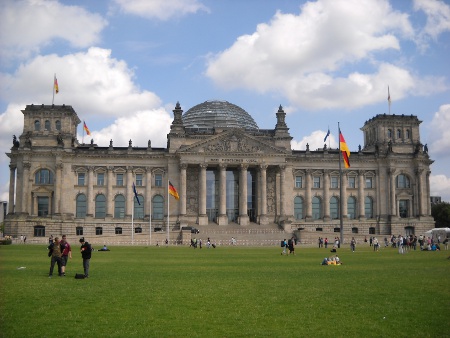
Architect Paul Wallot designed the Reichstag for the parliament of the German Empire, and the building opened in the 1890s. It later served the Weimar Republic’s legislature. The 1933 Reichstag fire became a crucial moment in the destruction of democracy under the Nazis. During the dictatorship, the building no longer functioned as a freely elected parliament in the earlier sense.
War badly damaged the building. After 1945 it stood in the western part of a divided Berlin near the border, while the Federal Republic’s parliamentary seat was in Bonn. The Wall and the surrounding empty border landscape gave the Reichstag a very different context from its current busy setting. After reunification, Berlin became the seat of federal parliament and the building was redesigned for that role.
British architect Norman Foster’s renovation created the modern glass dome and adapted the building for the Bundestag. Parliament began meeting here in 1999. The dome is not simply decorative: its public route above the chamber has often been interpreted as a statement about citizens and democratic transparency. Architecture can suggest such an idea, but the practical work of democracy takes place through institutions and debate, not through a view alone.
Visiting the dome and roof terrace
The official Bundestag visitor service offers free access to the roof terrace and dome, subject to advance registration and availability. Register directly through the official website, choose an available date and supply the visitor details requested. Do not pay a third party for the free official dome admission itself. Commercial tours may charge for a guide or a wider city walk; read exactly what their price includes.
The dome has a spiral visitor route and offers views over central Berlin. An audio guide may be available in several languages on the roof terrace. Check the current procedure, opening dates and accessibility details before travel. A confirmed booking is important; simply arriving at the building and joining a general queue should not be assumed to secure entry. There may be limited on-site registration options, but availability is uncertain.
On the roof, look towards Brandenburg Gate, Tiergarten, the government buildings and the river. Weather affects visibility, and the dome may close temporarily in particular conditions. A daytime slot is easier for identifying landmarks; an evening visit gives city lights and another atmosphere. Choose based on your interests and the available time.
Security and identification
The Reichstag is a working parliament. Expect security checks and bring the identification specified by the official visitor confirmation. Names in the registration should match the documents. Arrive at the instructed entrance and time, allowing a margin for queues. Bag rules and prohibited items can change, so review the current visitor information rather than copying a past traveller’s checklist.
Do not make another fixed booking immediately after a dome visit. Security, group check-in and time on the roof can vary. If you cannot attend, follow the official procedure so that your reserved place is released if possible. A sensible plan also leaves a weather alternative, since the outdoor terrace can be less enjoyable in wind or rain.
Guided tours and parliamentary visits
The Bundestag offers programmes beyond the dome, including guided tours, lectures and opportunities to observe plenary sittings under particular conditions. These require their own registration and depend on parliamentary schedules. A guided building tour can explain history and current functions in more detail than an independent roof visit. A plenary visit focuses on actual parliamentary work, which is a different experience from sightseeing.
Foreign-language options and group sizes may vary. Check the official programme for your date and book early if English interpretation is important. Some tours include an opportunity to visit the dome afterwards, subject to conditions; do not assume every product has the same sequence. A commercial tour of the government quarter may end outside the building or provide only assistance with a separate registration. Read the description carefully.
Official dome registration is free through the Bundestag. A paid tour can add a guide and broader government-quarter context. Check whether interior access is actually included.
Compare the existing government-quarter tour · Explore Berlin tours
The exterior and Platz der Republik
You can view the façade without booking a dome visit. The broad Platz der Republik in front gives room to examine the architecture and take photographs. Look at the older stone building and the contemporary dome together. The famous inscription “Dem Deutschen Volke” belongs to a different phase of the building’s history than the post-reunification glass structure.
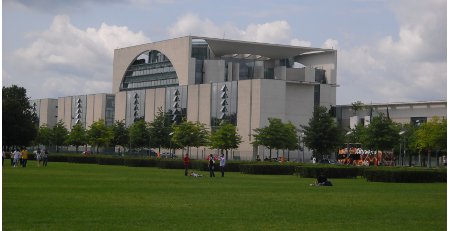
Security barriers and event arrangements can alter the paths around the building. Follow posted signs and keep clear of access areas. A walk around the exterior can connect to the Spree and the modern Chancellery. The nearby Pariser Platz and Brandenburg Gate are natural additions, but allow time for crossings and crowds.
How to get to the Reichstag
The building is in central Berlin. S-Bahn Brandenburger Tor and U-Bahn Bundestag are useful stations, depending on your starting point; Berlin Hauptbahnhof is also within a longer walk. Use a live journey planner for the exact entrance indicated in your confirmation. The nearest exit is not always the best one if security directs visitors to a specific side of the building.
Walking from Brandenburg Gate is straightforward, making the two sights a good pair. A longer route along the river can include the government district and a Spree cruise. Check the cruise pier separately; not every boat lands right by the Reichstag.
How long should you allow?
For an exterior walk and photographs, half an hour may be enough. A dome visit needs additional time for arrival, security, the roof route and the view. Budget at least one to two hours around your reserved slot rather than treating it as a five-minute stop. A guided tour or parliamentary programme has its own scheduled duration and may take much of a morning.
If you have only one day in Berlin, pair the Reichstag with Brandenburg Gate and a walk along Unter den Linden. If your dome slot is later, explore the area beforehand but keep enough time to return to the correct entrance. The site is easy to place in a central itinerary once the timed visit is the anchor.
Accessibility and visiting with children
The Bundestag publishes information about accessible entrances, lifts and assistance. Review the current details and mention specific needs during registration where requested. The dome route is designed for public access, but security and transport to the correct entrance still need planning. Visitors with visual impairments can consult the official descriptions of tactile information and guides.
Children may enjoy the views, while older children can connect the building to Germany’s democratic institutions. Explain the difference between the historic building and today’s parliament before visiting. A full political tour may be more suitable for teenagers than a short dome visit. Check the registration rules for every person in your group, including minors.
Reichstag in a wider history itinerary
The Reichstag’s location makes several chapters of Berlin history visible within a short walk. Brandenburg Gate was cut off by the Wall. The government district was reshaped after reunification. A trip to Checkpoint Charlie or the Berlin Wall Memorial adds a closer look at division. The Olympiastadion belongs to another political era and a different part of the city, so it merits a separate outing.
Do not let a rooftop panorama stand in for understanding the parliament’s work. If that interests you, seek an official lecture or plenary programme. The building is at once a historical monument, a visitor attraction and the workplace of elected representatives; each role deserves a different kind of attention.
Mitte and areas with a direct rail connection make an early or late Reichstag booking easier. Compare accommodation by its actual station and street.
How to register without confusion
Begin on the official Bundestag visitor site and choose the type of visit you want: dome, a guided programme or a parliamentary session. Supply the requested details for every participant and check the available time slots. Keep the confirmation accessible on the day and review identification instructions. The Bundestag can change registration windows and visit conditions, so do not rely on a screenshot of an old booking guide.
Some commercial websites describe a guided walk “including Reichstag” when they mean that the walk ends near the building. Others may help arrange access but charge for the guide, not for the official dome ticket. Distinguish these offers before paying. If your main objective is simply to enter the dome, the free official registration is the direct route. If you want historical commentary around the government quarter, a paid tour may add value.
What to look for from the roof
Begin with the landscape nearest the building: the lawns of Platz der Republik, the river and the parliamentary structures across it. Then orient yourself towards Brandenburg Gate and Tiergarten. The view reveals how close former border spaces are to the modern federal institutions. Maps and the official audio guide can help identify distant landmarks, but do not rush around the spiral ramp solely to collect photographs.
The light and visibility change with the weather. A cloudy day can still show the urban layout well. In strong sun, reflections in the glass make some angles harder to photograph; at night, city lights become the main attraction. If you are afraid of heights or cannot walk far, review the route and accessibility options in advance. Enjoying the roof terrace does not require completing every possible circuit.
Parliamentary life and the building
The Reichstag is not a museum that closes when the last visitor leaves. It is a working institution where parliamentary business takes priority. This explains why a prebooked visit can be modified by events, security or a sitting. The public programmes are valuable precisely because they connect travellers with the present democratic process. A dome visit gives architecture and views; a lecture or plenary session gives another kind of understanding.
If you are curious about how Germany’s federal parliament works, read the official introductory material before or after visiting. The roof cannot explain legislative debates by itself. A guided programme may answer questions about committees, parties and procedures, but its availability changes with the parliamentary calendar. Plan the specific experience you want rather than treating every “Reichstag tour” as the same ticket.
Frequently asked questions
Is the Reichstag dome free?
Yes, official dome admission is free, but advance registration and identification are required.
Can I enter without a reservation?
Do not rely on it. Limited on-site registration may be possible in some circumstances, but availability is not guaranteed.
Does a dome booking include parliament rooms?
No. Guided tours and plenary visits are separate programmes with their own conditions.
What if the dome closes?
Access can change because of weather, parliamentary business, events or security. Check official notices and retain flexibility in your day.