Unter den Linden is Berlin’s historic boulevard between the Brandenburg Gate and the Schlossbrücke near Museum Island. A walk along it passes embassies, cultural institutions, the State Opera and buildings linked to Prussian, imperial, Nazi, GDR and reunited Berlin. This guide follows the street from west to east, explains what to notice and suggests how to make it part of a practical city itinerary.
Unter den Linden at a glance
- Where: Berlin-Mitte, between Brandenburg Gate and Schlossbrücke.
- Length: roughly 1.5 kilometres, depending on the endpoints used.
- Best for: a central history and architecture walk.
- Allow: 30 minutes to cross directly, two to three hours with stops.
- Nearby: Pariser Platz, Bebelplatz, State Opera, Humboldt University, Museum Island and Humboldt Forum.
- Cost: walking the street is free; museums and performances charge separately.
Where does Unter den Linden begin and end?
At the western end, Pariser Platz and the Brandenburg Gate provide a clear starting point. Walk east and you pass a series of important buildings before reaching Schlossbrücke, the bridge leading towards Museum Island and the Humboldt Forum area. The exact point at which one street name gives way to another is less important than the continuous sightseeing route.
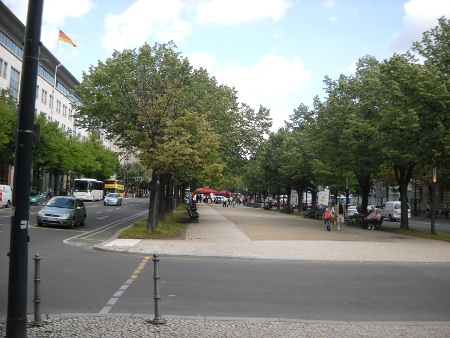
The boulevard’s name means “under the lime trees”. Trees remain part of its identity, but it is also a busy urban street with traffic, crossings and large construction projects from time to time. Treat it as a walk through central Berlin rather than a quiet park promenade. For a green break, Tiergarten begins just beyond Brandenburg Gate.
Visitors often combine the street with Museum Island. This makes geographical sense, but each museum can consume hours. Decide whether you want a broad outdoor walk or a museum day with a shorter section of the boulevard.
Start at Brandenburg Gate and Pariser Platz
The gate marks the western approach and is one of the strongest places to understand Berlin’s changing twentieth-century borders. During the division of the city, this was not the lively through-route it is today. After the Wall opened, it became a symbol of a reunified Berlin. The surrounding square was rebuilt and now includes embassies, cultural buildings and Hotel Adlon.
Stand on Pariser Platz for a moment before setting off. Looking west, you see the gate and the route into Tiergarten; looking east, the long boulevard leads into the historical centre. This orientation makes later stops easier to place. The square can be crowded, especially at midday and during events, so early morning may be better for unhurried photographs.
From here, continue east. Do not rush to the far end: part of the boulevard’s interest lies in how the buildings, setbacks and side streets change as you go.
What to see along Unter den Linden
Embassies and public buildings
The western part includes diplomatic and public buildings associated with Berlin’s role as the German capital. Security arrangements vary, and some façades are more easily appreciated from the opposite side of the street. The relationship between new construction and reconstructed streetscape is worth noticing after reading about the area’s postwar history.
Not every building is open to visitors. This is a street where exterior observation and context often matter more than trying to enter each address. If a particular embassy or institution offers a public event, check its own schedule and registration conditions.
Humboldt University and the State Opera
Farther east, the boulevard passes institutions associated with scholarship and performance. Humboldt University occupies historic buildings along the route, while the Staatsoper Unter den Linden is a major opera house. The buildings can be appreciated on a walk, but a performance requires separate planning and a ticket.
A visitor interested in Berlin’s intellectual history may spend longer here than someone focused on architecture alone. The boulevard’s prestigious appearance should not obscure the political uses and ruptures in its history. Read the nearby memorials and explanations rather than treating the street as a simple sequence of grand façades.
Bebelplatz and the book-burning memorial
Bebelplatz is one of the most important detours from Unter den Linden. The square is bordered by notable buildings, including the State Opera and St Hedwig’s Cathedral. It is also the site of a memorial to the Nazi book burning of 1933. The memorial is set into the ground, so visitors can miss it if they only glance across the open square.
Allow time to find and understand the memorial. It changes the tone of the walk and connects a place of grand cultural institutions with the persecution of writers and ideas. VisitBerlin provides background on Bebelplatz and the memorial; reading a short explanation before arrival can make the stop more meaningful.
Zeughaus, Schlossbrücke and Museum Island
Near the eastern end, the historic Zeughaus and the approach to Schlossbrücke signal a transition towards the museums and the former palace site. The German Historical Museum is associated with the Zeughaus, but exhibition access can change; check current status before planning an interior visit.
Across the bridge, the landscape opens towards the Lustgarten, Berlin Cathedral and Museum Island. The Humboldt Forum stands on the site of the former Berlin Palace. Its history and current use add another layer to a boulevard shaped repeatedly by building, demolition and reconstruction.
Why is the boulevard historically important?
The route began as a connection from the royal centre towards hunting grounds west of the city. Over time it developed into a ceremonial and cultural boulevard. Prussian rulers, later governments and institutions used the setting to present authority. This long history explains the concentration of monuments and formal architecture.
The twentieth century transformed it repeatedly. War damaged buildings, the GDR rebuilt and reinterpreted parts of the centre, and reunification led to further restoration and new construction. A present-day walk therefore crosses more than one historical period. A building may look old but have been substantially reconstructed; another may be new while referring to an older design.
The boulevard is useful as a line through Berlin’s history, but no single walk can explain every era. Choose a few stops for deeper reading. Bebelplatz addresses Nazi persecution; Brandenburg Gate helps explain division and reunification; the eastern end raises questions about Prussian heritage and the redevelopment of the palace site.
A two-hour walking route
Begin at Brandenburg Gate, look around Pariser Platz and then head east on Unter den Linden. Pause at the major crossroads and public buildings that interest you. At Bebelplatz, step off the boulevard to see the square and memorial. Continue past Humboldt University and the Zeughaus towards Schlossbrücke.
At the eastern end, choose between the cathedral, the open spaces around the Humboldt Forum or a museum. If you enter a museum, your walk becomes a half-day plan rather than a two-hour circuit. Return by public transport rather than feeling obliged to retrace the whole boulevard.
If you have only one hour, skip interior visits and concentrate on the gate, Bebelplatz and the eastern bridge. If you want photographs with fewer people, start early. Most museums and cultural venues open later than the street itself, so a morning walk can be paired with an indoor visit afterwards.
How to get there
Brandenburger Tor station serves the western end. The U5 has stops along or near the route, making it easy to shorten the walk or return from the eastern end. Check the current BVG planner for the best entrance and any service changes. Our U-Bahn guide and S-Bahn guide help with the network.
From Berlin Central Station, you can connect by public transport or walk through the government district to Brandenburg Gate. If you have luggage, a direct transit connection may be more comfortable than turning the arrival into a sightseeing walk.
Stay near Unter den Linden
Hotels near the boulevard suit a central sightseeing trip, but rates and noise levels vary. Compare the precise address with your chosen station and check whether the room faces a busy street or quieter courtyard.
Guided walks and other Berlin tickets
A guided historical walk can give useful context to buildings that are easy to pass without understanding. Check whether the tour covers Bebelplatz, Brandenburg Gate and the eastern boulevard, as some routes concentrate on only one section. Museum tickets and concert tickets are separate decisions.
Explore central Berlin
Compare guided walks, boat trips and museum experiences by route, language and time. A boat cruise is an additional activity, not a substitute for walking the boulevard.
More Berlin ticket ideas from the original article
These attractions are elsewhere in the city. Check the current offer and availability before booking:
Practical tips
Cross at signals and expect traffic, cyclists and other pedestrians. The broad pavements make the route straightforward, but construction can change a crossing or block a façade. Keep a little flexibility if a particular photo angle matters. At political or public events, the Brandenburg Gate area may be especially busy.
For food, there are cafés and restaurants along the route and on side streets. The most prominent addresses can be expensive; a short detour may provide more choice. If you are visiting several museums, plan a proper break rather than trying to complete the boulevard, galleries and lunch in one uninterrupted stretch.
Accessibility varies by building and station even though the boulevard itself is relatively straightforward. Check lifts and accessible entrances for the particular museum or performance venue you plan to enter.
Frequently asked questions
What does Unter den Linden mean?
It means “under the lime trees”, a reference to the trees associated with the historic boulevard.
Is it worth walking the whole street?
Yes, if you have time for at least a few stops. A direct crossing is short, but the value lies in the buildings, squares and memorials along the way.
Is the street pedestrian-only?
No. It is an urban boulevard with traffic and marked crossings. Use the pavement and follow the signals.
What is the best starting point?
Brandenburg Gate is a clear western start. You can also reverse the walk from Museum Island if that better suits your day.
Do I need a ticket?
Walking the boulevard and visiting public squares is free. Museum exhibitions, guided tours and performances have separate arrangements.
Unter den Linden works as a compact introduction to central Berlin. Walk it slowly enough to notice how the grand street links very different historical periods, then choose one or two places for a longer visit.