Berlinische Galerie is Berlin’s state museum for modern art, photography and architecture. Its collection follows work connected with the city from 1870 to the present, making it a useful place to understand Berlin through images and design. The museum is at Alte Jakobstraße 124–128 in Kreuzberg and is closed on Tuesdays under its current schedule. Check the exhibition programme before travelling, because the works visible on a particular day can change.
At a glance
- Modern art, photography and architecture with Berlin as a central theme.
- Alte Jakobstraße 124–128 in Kreuzberg.
- Current opening pattern: Wednesday–Monday 10 am–6 pm; Tuesday closed.
- Adult admission increased to €14 from 9 October 2026; confirm current price and concessions.
A museum about Berlin’s creative life
The Berlinische Galerie collects work made in or connected to Berlin, while looking beyond a narrow local identity. The city attracted artists, architects and photographers through different political eras. That gives the collection a broad range of subjects and styles, from late nineteenth-century art to recent work. It is a different visit from the Alte Nationalgalerie on Museum Island, whose main focus is nineteenth-century art. The official visitor page lists current exhibitions, ticket categories and services. Use it to decide whether the current programme fits your interests rather than relying on a list of artists from an old article.

The Kreuzberg location
The museum’s address is Alte Jakobstraße 124–128, 10969 Berlin. This is a walkable part of Kreuzberg, but it is not directly at one of the city’s major railway hubs. Check the final bus or U-Bahn connection and walk in a live planner. The square in front of the building offers a clear point to meet companions. A museum visit pairs naturally with a wider exploration of Kreuzberg, though the neighbourhood is large and a café or other sight may be farther away than a map suggests. Our districts guide helps place the museum in the city. Leave daylight for the surroundings if this is your first visit.
Painting and Berlin modernism
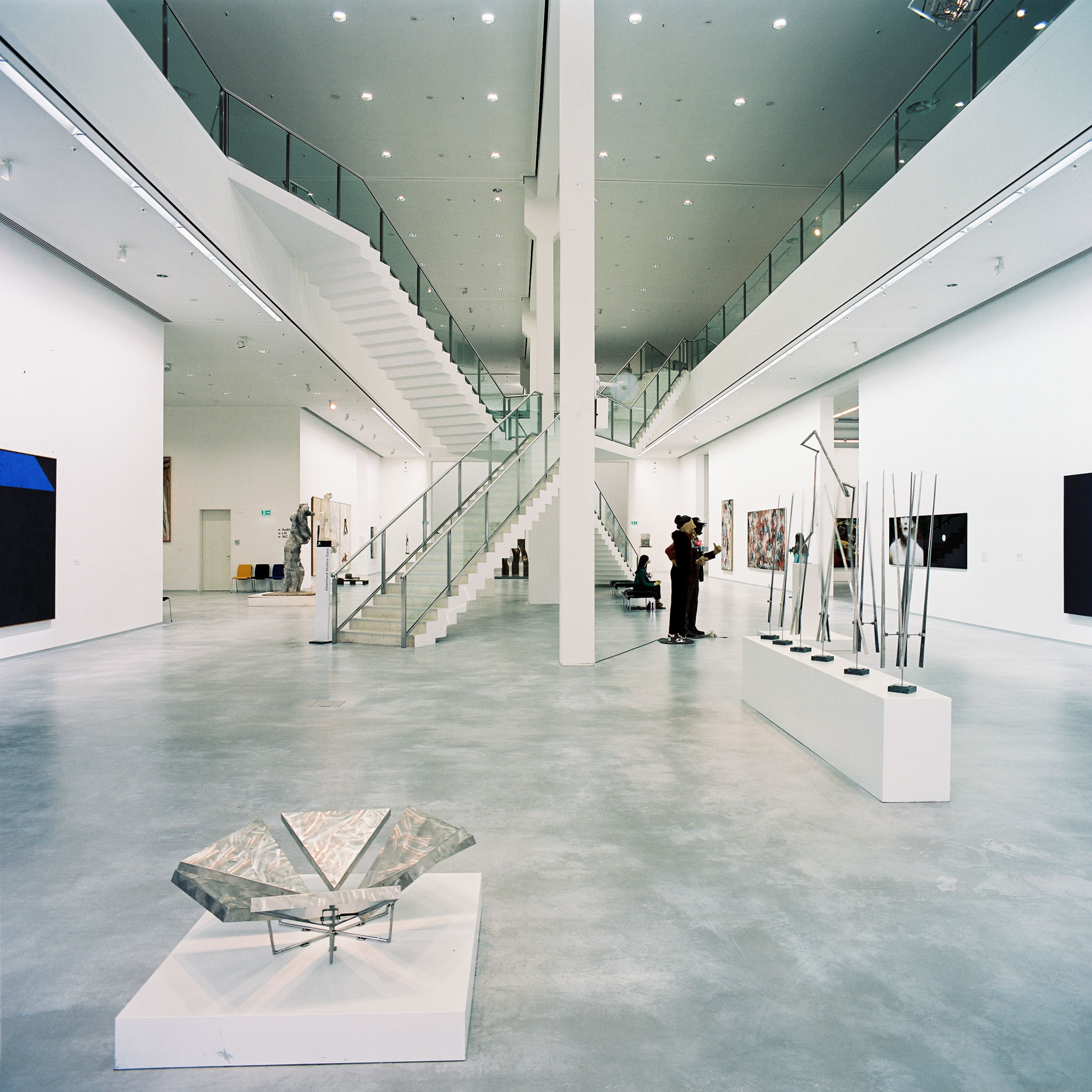
The museum’s collection connects artistic experiments with the city’s changing social and political conditions. Rather than looking for one textbook sequence, compare how different artists respond to urban life, war, migration and everyday surroundings. A painting’s date can change how you read its subject. If a familiar name is missing, remember that loans and rotations affect the display. Temporary exhibitions may focus on a specific artist or theme. Read the introductory panel for the curatorial idea, then spend time with a few works that challenge or interest you. Close looking is more valuable than racing through every room to say you have seen the whole museum.
Photography as evidence and art
Photographs can document buildings, streets and people, but they are also carefully framed objects. Ask who made an image, for whom, and what was excluded from the frame. Berlin changed rapidly across the twentieth century, so a street scene can become historical evidence as well as an artwork. Captions and series matter: one image may be ambiguous until you see it beside others. Some photographs raise questions about consent and representation, especially when people were pictured in difficult circumstances. The museum’s photography collection is a reason to slow down. Do not assume that every photo in an online archive is part of the current physical exhibition.
Tickets and experiences
Compare the specific experience, included services, language and cancellation terms.
Architecture and the city
Architecture is a distinctive part of the Berlinische Galerie’s remit. Models, drawings and photographs can show proposals that were built, changed or never realised. Compare a plan with the street outside and ask how Berlin’s division, rebuilding and growth shaped it. A gallery about architecture may not look like a conventional art display, but it can help you understand the city’s physical form. Look for the relationship between housing, public institutions and cultural buildings. If your main interest is walking the actual streets, use the museum as a starting point and then explore one relevant neighbourhood. An exhibit can sharpen what you notice outdoors.
Changing exhibitions
The museum organises temporary shows alongside collection displays, so the precise mix changes. Check dates carefully if travelling for a named artist. An exhibition may close before the museum’s general timetable changes, and installation work can restrict a gallery. A special event may have separate admission or registration. The official programme is more reliable than a third-party article listing a fixed selection of works. If several exhibitions appeal, give yourself two or more hours rather than trying to fit them between tightly timed attractions. Some modern art demands reading, listening or viewing a complete film, while other rooms are quick to explore.
Tickets and opening hours in October 2026
The current official pattern is Wednesday to Monday 10 am–6 pm, with Tuesday closed. The museum’s service page states that standard admission changes from €12 to €14 on 9 October 2026; a reduced rate of €7 is listed, subject to eligibility and proof. Under-18s have free admission. A reduced “Happy Wednesday” applies on the first Wednesday of each month. Check the ticket page for your date, group conditions and current promotions. The Museum Pass Berlin participates, but special conditions or advance reservations may matter. Do not carry forward an old 2022 price.
Accessibility and visitor services
The museum publishes details for visitors with different needs, including information on step-free access and assistance. Consult the specific service page if you require a particular route, wheelchair place or visual or hearing support. A general statement that a museum is accessible cannot answer every individual situation. Cloakroom rules may restrict large bags, and a quieter visiting hour can make the experience easier for people sensitive to crowds. Check whether Café Dix and the shop are open if you plan a break there. The main visitor information page is the best place to verify facilities just before travel.
With children and teenagers
The collection’s city connection can help young visitors relate an artwork to places they have seen. Let them choose a photograph of a street, an architectural model or a painting and ask how Berlin may have looked at that time. Temporary exhibitions vary in subject and may be more suitable for older children. Under-18s currently enter free, but a free ticket does not imply every programme is free or drop-in. Check family activities and any registration requirement. Keep the visit short enough for genuine curiosity. A walk outside afterward can connect an exhibit to the built environment rather than treating the museum as an isolated indoor stop.
Berlinische Galerie and other art museums
Compare it with Hamburger Bahnhof for contemporary art on a larger railway site, Gemäldegalerie for older European painting or Alte Nationalgalerie for the long nineteenth century. Each museum has a different programme and location. Choose based on a current exhibition, not the vague label “art gallery.” If you have limited time, two museums in separate districts may require substantial transport and attention. The Berlinische Galerie is particularly useful when you want a cross-section of the city’s visual history, including photography and architecture as well as painting.
A practical half-day
Arrive with a chosen exhibition in mind, then explore a complementary collection area. Take a break in the museum or outside and continue with a walk through nearby streets. If you intend to visit another ticketed site, account for travel rather than assuming central Berlin is small enough to cross instantly. A Spree or Bergmannstraße outing is a separate addition that may involve transit. On a Tuesday, when the museum is normally closed, choose a different Berlin museum and return another day if the exhibition matters to you. The opening pattern should shape the itinerary from the start.
What to check before leaving
Review the current exhibition dates, the exact day’s hours, ticket type and accessibility details. If you have a Museum Pass or a partner ticket from the Jewish Museum, confirm the applicable conditions. Save the address, and check the final walk from your public transport stop. If your main interest is a particular photograph or painting, the collection database alone cannot prove it is on display. Ask the museum if it is decisive. This preparation prevents a disappointing journey and allows you to spend your time with the work rather than at a ticket desk solving avoidable questions.
Understanding the twentieth-century city
Berlin’s art developed amid political upheaval, migration, division and reunification. An exhibition at Berlinische Galerie may juxtapose works that respond to these histories in radically different ways. Pay attention to dates: a work created before the First World War does not carry the same immediate context as a postwar photograph or a contemporary installation. Labels and curator texts help connect objects with artists and institutions. You do not need to know every movement before entering. One useful approach is to follow a theme such as the changing street, then ask how each artist framed Berlin and what they chose to exclude.
Photography as an urban record
Photographs in an art museum can be documents, constructed images or both. A view of a street may preserve the appearance of a vanished place, but the camera position, timing and selection still express a viewpoint. Compare a photograph with a nearby painting or architectural plan to see how medium changes the story. Check the exhibition label for date and location before treating an image as evidence about all of Berlin. Some temporary shows may restrict photography, particularly for loans. Follow posted rules, and avoid blocking another visitor while trying to copy a work with a phone. Give the image itself time before photographing the caption.
Design and architecture in the collection
The museum’s remit extends beyond paintings to architecture, graphic art and other forms of visual culture. Plans, posters and design objects can make the city’s built environment intelligible in ways a street walk alone cannot. Consider who commissioned a project, who used it and whether it was ever built. A proposal that stayed on paper may still reveal what Berlin imagined for itself. After the gallery, carry one question into Kreuzberg or the wider city: whose needs does a building or public space serve? This turns an indoor visit into a way to read the streets more closely.
Choosing an exhibition by interest
Review the current exhibition programme rather than assuming the same rooms are always available. A special show may focus on a single artist while the collection presentation covers a broader period. Read whether the standard ticket includes all displays, whether a timed slot is required and which texts are available in English. If you have limited time, choose the exhibition that best matches your interests and spend longer with it. An audio guide or public tour can help with unfamiliar movements. The museum is manageable as a focused half-day stop, leaving time for a neighbourhood walk without racing past works.
Where to stay in Berlin
Compare accommodation by district and transport links before booking.
A wider Kreuzberg visit
Berlinische Galerie sits in a district whose street life differs from Museum Island’s formal museum setting. Walk toward the Jewish Museum area, a canal or a local café after the exhibition, checking exact walking times on a map. The transition from gallery to neighbourhood is useful for thinking about how institutions preserve art while the city continues to change around them. Respect residential streets and businesses rather than treating the whole district as an outdoor display. If travelling farther, check a live BVG connection. A day that pairs one substantial collection with a neighbourhood walk often gives a clearer impression of Berlin than several rushed admissions.
Before leaving the gallery
Take a moment at the exit to note one artist, image or design question that stayed with you. Look up the work later using the museum catalogue, and compare it with the Berlin streets you saw on the same day.
Frequently asked questions
Is Berlinische Galerie on Museum Island?
No. It is in Kreuzberg at Alte Jakobstraße 124–128.
Is it open Tuesday?
The regular schedule lists Tuesday closed.
What does it collect?
Modern art, photography and architecture connected with Berlin from 1870 onward.