The German Museum of Technology (Deutsches Technikmuseum) is one of Berlin’s most substantial museums. Its historic locomotives, aircraft, ships and exhibitions on everyday technology fill several buildings in Kreuzberg. Next door, the Science Center Spectrum offers hands-on experiments. This guide explains what to see, how much time to allow, how to get there and how to combine the visit with other Berlin sights.
German Museum of Technology at a glance
- Address: Trebbiner Straße 9, 10963 Berlin; Spectrum and Ladestraße: Möckernstraße 26.
- Nearest stations: U-Bahn Gleisdreieck or Möckernbrücke; S-Bahn Anhalter Bahnhof.
- Typical visit: at least two to three hours; half a day if you also visit Spectrum.
- Opening: closed Mondays; check the official website for current hours, tickets and exhibition restrictions.
- Best for: railway and aviation enthusiasts, families, science fans and visitors interested in Berlin’s industrial history.
What kind of museum is it?
The museum looks at how technology has changed work, travel, communication and daily life. Its scope is broad: railways and aviation are major draws, but exhibitions also explore shipping, computing, communications, textiles, energy and other subjects. You do not need specialist knowledge to enjoy it. Large original objects make the history tangible, while labels and displays provide context for those who want to go deeper.
The setting is part of the story. The museum occupies a former railway and industrial area near the old Anhalter freight facilities. Gleisdreieck, now also the name of a nearby park, reflects the transport infrastructure that shaped this part of Berlin. A preserved locomotive looks different when you understand that trains once worked on the surrounding land.
This is a large complex, not a single gallery that you can comfortably see in thirty minutes. It is sensible to choose two or three areas that interest you most and treat anything else as a bonus. Families with young children may want to alternate static displays with interactive sections and breaks.
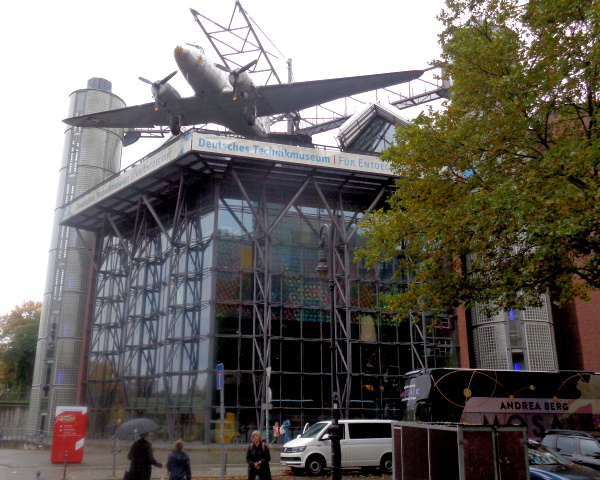
Highlights inside the German Museum of Technology
Rail transport and historic locomotives
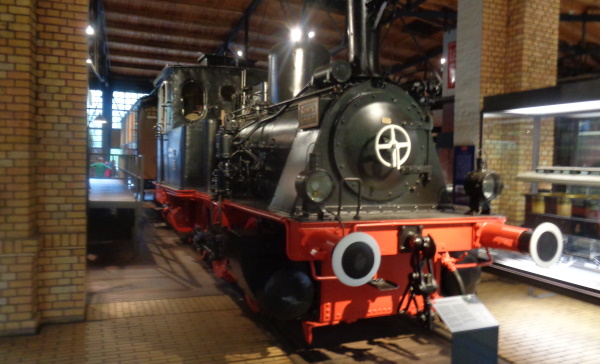
For many visitors, the railway halls are the highlight. Steam locomotives, carriages and railway equipment show how transport developed and how it affected Berlin and Germany. The scale of the machines is difficult to convey in a photograph; walking alongside an engine lets you see the engineering and the working conditions associated with it. Look beyond the best-known locomotives for smaller objects about stations, signalling and the people who operated the network.
The railway exhibition is also a suitable entry point if you are visiting with children. Some are drawn mainly to the engines, while older visitors may be interested in the social history behind faster travel and expanding cities. Give this section enough time instead of rushing through on the way to aircraft.
Aviation and space travel
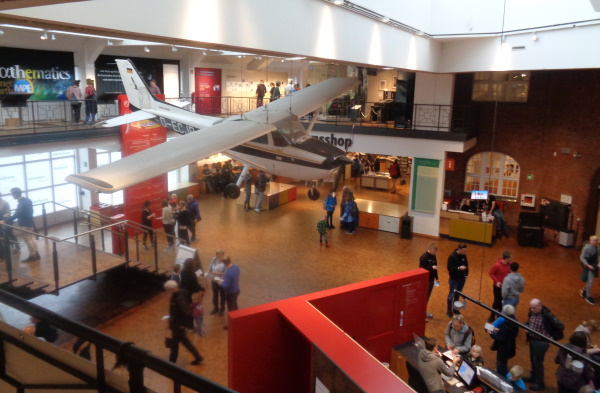
Aircraft and aviation exhibits make another strong impression. The famous aircraft mounted on the outside of the building is an easy landmark when approaching the museum. Inside, the displays invite you to look at flight as a technical, social and historical subject. Some aviation history is closely tied to war and Berlin’s twentieth century; the museum is therefore more than a collection of attractive machines.
If you are particularly interested in aircraft, allow a substantial part of your visit for this area. Families can use the large objects as a starting point for questions about how flying works, while adults may spend longer reading the accompanying explanations.
Shipping and waterways
The shipping displays make sense in a city linked by rivers and canals. Models, vessels and equipment illustrate how water transport carried people and goods. A later Berlin boat tour gives a different perspective on the waterways still visible in the city. Museum objects explain their technology; the boat trip shows the urban setting where waterways remain part of everyday Berlin.
Computing and communication
Early computing is another reason to visit. Konrad Zuse’s work has a particular Berlin connection, and the museum uses machines and explanatory displays to show the development of information technology. The subject is not confined to familiar modern computers: changes in telecommunications, media and measurement provide a wider picture of how people exchanged information before smartphones and the internet.
Visitors often find it useful to compare an old device with one they use today. What task did it solve, how much space did it need, and who could afford or operate it? Such questions make apparently technical displays relevant even to people without an engineering background.
Other permanent and temporary exhibitions
There is more than transport. Depending on which areas are open, exhibitions may cover subjects such as textiles, tools, sugar, energy or photography. Temporary exhibitions add another reason for a return visit. The programme and accessible rooms can change during renovation, so consult the museum’s official visit page when planning around a particular theme. At the time of this update, access to the photography, film technology and chemistry and pharmacy exhibitions is unavailable because of renovation work.
Trying to enumerate every gallery in a fixed itinerary would make the day rigid. Instead, look at the current floor plan at the entrance, decide on your priorities and leave time for a break. The distance between sections can be significant.
Science Center Spectrum
Spectrum is the museum’s interactive science centre. It is particularly useful for visitors who like to learn by trying things themselves. Experiments explore basic phenomena in science and technology, making it a good complement to the historical objects in the main museum. You can spend a considerable amount of time here if the group is engaged; children may want to repeat experiments rather than move on to the next room.
Check current ticket conditions and opening arrangements before travelling. Spectrum has a separate entrance at Möckernstraße 26, although it forms part of the same museum complex. The museum notes that large bags and backpacks are not allowed inside Spectrum; lockers are available for coats and bags, but not for large luggage. Accompanying adults remain responsible for young children throughout the visit.
For a short museum visit, choose either Spectrum or a selection of the main exhibition halls. For a family half day, combine both, with a meal or outdoor pause between them. Groups visiting Spectrum on weekday mornings may need to reserve a free time slot under the museum’s current arrangements.
Where to stay in Berlin
Kreuzberg, Potsdamer Platz and the area around Anhalter Bahnhof can be convenient bases for the museum. Compare the exact hotel location and nearby U-Bahn or S-Bahn stop; Berlin’s districts are large, and a hotel listed as “Kreuzberg” may not be close to the entrance.
Opening hours, tickets and time needed
According to the museum’s current visitor information, the museum is generally closed on Mondays, opens Tuesday to Friday from 9:00 to 17:30, and on Saturdays, Sundays and holidays from 10:00 to 18:00. The stated last entry is 17:00. Special holiday arrangements and temporary closures can override the standard schedule. The old article’s “2022” heading and admission prices should not be used for a current trip.
Check the official ticket shop for the current admission charge, reductions and family conditions rather than relying on an old price quoted in a travel guide. Buying online can be useful on busy dates. If you are considering the Berlin tourist cards, check whether the museum offers a discount or is included under the exact version you intend to buy. A general museum pass and a transport ticket are different products.
Two to three hours gives you time for several core exhibitions. A full half day is more realistic for an interested visitor who wants to read extensively or include Spectrum. For children, the right duration depends less on the number of rooms than on their interest in the hands-on areas. You can always save a second section for another visit.
Getting to the museum
The main entrance is at Trebbiner Straße 9, 10963 Berlin. U-Bahn Gleisdreieck is served by U1, U2 and U3 according to the museum; Möckernbrücke is served by U1, U3 and U7. S-Bahn Anhalter Bahnhof is another option. Check the current BVG planner for disruptions and for the best station from your accommodation. Our guides to the U-Bahn and S-Bahn explain the two rail networks.
Paid car parking is available according to the museum, and there is bicycle parking near the main building and Ladestraße. Public transport is often simpler for a visitor staying in central Berlin, especially if you want to combine the museum with other attractions instead of returning to a parked car. Do not assume that every nearby parking space belongs to the museum.
Spectrum and Ladestraße use the address Möckernstraße 26. Check which entrance you need when you arrive, particularly if you have booked an event or are meeting a group.
Visiting with children or on a rainy day
The museum is a strong choice when the weather makes outdoor sightseeing less appealing. The locomotives and aircraft provide immediate visual interest, while Spectrum offers activities. Still, the large complex can be tiring. Plan a few highlights rather than promising to see every object, and ask at the entrance which facilities and exhibitions are currently open.
For school-age children, consider a route through railways, aviation and Spectrum. Younger children may enjoy the machines but need more frequent breaks. The museum provides lockers for coats and ordinary bags, which can make moving between areas easier. Do not bring large suitcases expecting to leave them there.
Photographs for personal, non-commercial use are generally permitted without a tripod or clip-on flash, except in designated areas. Follow signs and staff instructions. If accessibility is important for your group, check the museum’s current access information for lifts, routes and any temporary restrictions before travelling.
More Berlin activities
The technology museum can fill much of a day. If you have time afterwards, compare guided city walks, boat trips or other attractions for a separate afternoon. Read the meeting point, language and cancellation conditions before booking.
What else is nearby?
Park am Gleisdreieck makes an easy outdoor break after the museum. Potsdamer Platz and the Kulturforum are also within the broader area, though you should allow time for the walk or a short transit ride. Art enthusiasts can consider the Gemäldegalerie or Museum of Decorative Arts on another part of the day.
If technical history is your main interest, the German Spy Museum has a different focus on surveillance and espionage. For broader museum planning, see our guides to the Museum Island, Museum of Natural History and Museum for Communication. The latter pair can help you decide whether you want more science or more media history on a future visit.
Frequently asked questions
Is the German Museum of Technology good for children?
Yes. The large vehicles are easy to appreciate, and Spectrum offers hands-on experiments. Plan breaks and select a few areas according to your children’s ages.
Is Spectrum in the same building?
It is part of the museum complex but has an entrance at Möckernstraße 26, separate from the main museum address at Trebbiner Straße 9. Check your ticket and any event instructions.
Can I see everything in two hours?
Two hours is enough for selected highlights, not a thorough visit to the whole complex. Allow longer if you want to include Spectrum.
Is the museum open on Monday?
It is normally closed on Mondays. Holiday hours can vary, so consult the museum’s current visitor information.
What is the closest station?
Gleisdreieck and Möckernbrücke U-Bahn stations and Anhalter Bahnhof S-Bahn station are useful options. Choose according to the entrance and your route.
The German Museum of Technology rewards a focused visit. Pick the transport or technology themes that interest you, include Spectrum if hands-on science appeals, and use the current museum information for hours, tickets and temporary gallery closures. Leave enough time for breaks between buildings.