 Posted by
The Schwules Museum in Berlin documents and presents LGBTQ+ histories, art and culture. Its exhibitions change, so a visit is less about seeing one fixed collection and more about engaging with the questions and stories currently on display. This guide covers what to expect, the museum’s history, tickets, opening hours, accessibility and nearby places to explore.
Schwules Museum at a glance
- Address: Lützowstraße 73, 10785 Berlin.
- Focus: LGBTQ+ history, art, culture and contemporary perspectives.
- Exhibitions: changing programme; check the current show before visiting.
- Standard admission: currently €10 regular, €5 reduced, with a €15 solidarity ticket listed by the museum.
- Closed: normally on Tuesdays; temporary closure 3–8 November 2026 is announced.
- Allow: around one to two hours, depending on the exhibitions and your interest in the texts.
What is the Schwules Museum?
The museum’s German name literally refers to a gay museum, but its programme encompasses broader queer histories and communities. It presents exhibitions, maintains an archive and library, and offers talks, tours and educational activities. Visitors encounter subjects ranging from personal experience and activism to art, identity and the ways institutions have represented LGBTQ+ lives.
Its value is partly in preserving material that was long overlooked by conventional museums. Posters, photographs, publications, objects and artistic work can tell different stories from a simple chronological account. The programme may be historical in one season and more strongly focused on contemporary art or debate in another. Look at the exhibition list rather than assuming that the same displays are always on view.
The museum is relevant both to visitors with a particular interest in queer history and to travellers seeking a deeper understanding of Berlin. You do not need prior knowledge, although taking time with the labels helps. Much of the information is presented in German and English according to the museum’s access information.
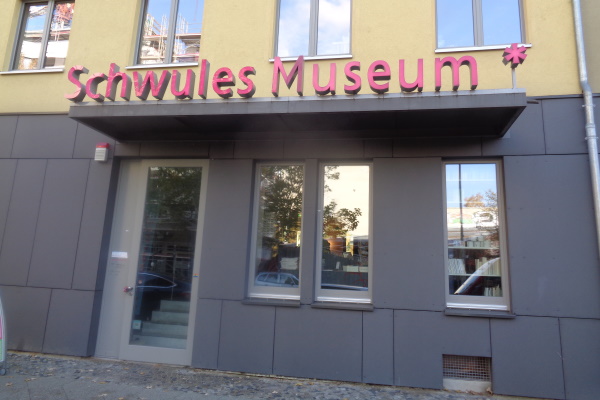
A short history of the museum
Schwules Museum began in the 1980s, when the documentation and public presentation of gay history had far less institutional support than today. The museum developed from initiatives to collect, research and exhibit histories that were otherwise at risk of disappearing from public memory. Its long existence is itself part of the story of queer cultural work in Berlin.
The institution moved to Lützowstraße in 2013. The present address is in the Tiergarten area, close to Schöneberg, a district with a long association with LGBTQ+ life. This geography can be confusing in older descriptions that simply call the museum a Schöneberg attraction. The museum and nearby Nollendorfplatz can be combined on foot, but they are not the same location.
History is not limited to a single national narrative. Exhibitions can examine people, movements and artistic responses from different periods and places. The archive and library support research beyond what is visible in the temporary exhibition rooms. A visitor should therefore distinguish the museum’s collections from the particular selection on display on a given day.
What will you see?
Changing exhibitions
There is no reliable fixed list of objects that every visitor will see. The museum stages changing exhibitions, so a past visitor’s photograph or an old blog post may describe a display that has already ended. Check the museum’s exhibition calendar shortly before your trip. Read the themes and any content information to decide which visit will interest you most.
Some shows are grounded in archival documents; others foreground art or current debate. Photographs, writing, sound, video and installations can demand different amounts of time. A small exhibition can still be substantial if you read and watch carefully. If your time in Berlin is limited, choose a date when the programme matches your interests instead of treating it as a generic museum stop.
Archive, library and events
The archive and library make the institution more than an exhibition space. They are resources for people researching LGBTQ+ histories, publications and cultural material. Their opening hours differ from those of the exhibitions. If you want to consult material rather than browse the displays, check the museum’s current research and access instructions first.
Public talks, workshops and tours can provide further context. The regular public tours listed by the museum currently take place on Thursday at 18:00 and Saturday and Sunday at 16:00, without registration, subject to space and the programme. For a private group, the museum offers advance booking and can discuss language requirements. Event schedules can change, so verify the particular date.
Tickets and opening hours
At the time of this update, the museum lists regular admission at €10, reduced admission at €5 and a solidarity ticket at €15. Special tickets and free-admission eligibility have their own rules. The old version of this article quoted €7.50, which is no longer the current regular price. Check the official visit page before you travel.
Regular exhibition hours currently are Monday, Wednesday and Friday from 12:00 to 18:00, Thursday from 12:00 to 20:00, Saturday from 14:00 to 19:00 and Sunday from 14:00 to 18:00. Tuesday is normally closed. Public-holiday hours differ. The museum has announced a complete closure from 3 to 8 November 2026 and a reduced exhibition programme from 9 to 26 November 2026 during renovation. These notices are relevant if your Berlin trip is in November.
The current exhibition list matters as much as the opening hours. If only one show is open during your visit, consider whether it is the subject you want to see. The museum has announced reduced admission during the limited programme in November 2026.
How long do you need?
One to two hours is a reasonable starting estimate for the exhibitions. Someone who reads every text, watches video works or joins a tour may spend longer. A visitor interested in one specific exhibition could finish sooner. Do not plan a timed appointment immediately afterwards if you want room to engage with the material.
A guided tour can be helpful when you want context beyond the wall texts or when visiting with a group. The museum limits the number of participants in its regular tours; check the current event page rather than assuming a place at a particularly busy time.
How to get to Lützowstraße 73
The address is Lützowstraße 73, 10785 Berlin. Nollendorfplatz and Kurfürstenstraße U-Bahn stations are useful approaches, depending on your starting point and mobility needs. Check current BVG journey details and station accessibility rather than relying on a fixed walking time. Our U-Bahn guide explains the network.
You can combine the museum with a walk around Nollendorfplatz and Motzstraße, both associated with Schöneberg’s LGBTQ+ history and contemporary community life. This should be done with respect for the fact that it is a living neighbourhood, not an exhibition. The walk also puts the museum’s historical and cultural subjects into a wider urban setting.
From the museum, Tiergarten park is another possible stop for a break outdoors. Travellers interested in further museums can plan a separate visit to the Berlinische Galerie or the Museum Island, though these require additional travel time.
Accessibility
The museum gives detailed access information. The main street entrance has three steps, but a step-free entrance is available through the courtyard; ring the bell at the gate. Exhibition rooms, café, office and library can be reached at ground level or via ramps and lifts according to the museum. There are accessible toilets. If you need a particular arrangement, consult the current access page or contact the museum before travelling.
The museum notes that information is generally provided in writing in German and English, and that assistance dogs are permitted. Individual exhibitions can use different media, so visitors with specific visual, hearing or sensory needs should read the access information for the current show. Public and private tours may include German Sign Language options when arranged appropriately.
Parking close to the museum is limited and paid, and the museum says there is no accessible parking space nearby. Public transport or a prearranged drop-off may be more practical depending on your circumstances.
Stay near Schöneberg and Tiergarten
Hotels around Nollendorfplatz, Tiergarten and Potsdamer Platz offer different balances of nightlife, park access and transport links. Check the exact street and station, particularly if you want to walk back after an evening out.
Exploring queer Berlin beyond the museum
Schöneberg is a natural continuation of a museum visit. Around Nollendorfplatz and Motzstraße you will find bars, cafés and venues associated with LGBTQ+ Berlin. Some places are long-standing; others change regularly. For a historical perspective, look for reliable local walking tours and interpretive material rather than assuming that today’s venues tell the whole story.
Berlin’s queer history reaches well beyond one neighbourhood. It includes periods of cultural openness, persecution under National Socialism, activism in divided and reunified Berlin, and continuing debates about rights and representation. The museum’s changing exhibitions can provide a point of entry into these complex subjects. A guided walk may help connect the museum to sites elsewhere in the city.
Plan nightlife separately from a museum visit. Opening hours, entry policies and audiences vary by venue. The museum itself is a cultural institution, not a ticket to a club or entertainment district. Its programme can be challenging, reflective or celebratory depending on the exhibition.
Explore Berlin with a tour
A guided neighbourhood or history walk can add context to a visit to the Schwules Museum. Check whether the route actually covers LGBTQ+ history, what language it uses and where it begins. The museum’s own exhibitions and tours should be your first source for its current programme.
Other Berlin activities from the previous article
The earlier page included a box with general Berlin ticket ideas. They are separate from museum admission. I have kept the useful options below with a clearer description: verify availability, exact inclusions and prices on the booking page before purchasing.
Four additional Berlin tickets
- Berlin TV Tower ticket — check the exact reservation and seating conditions.
- One-hour Spree cruise — a central Berlin sightseeing activity.
- Berlin Story Bunker exhibition — a separate historical exhibition.
- Illuseum Berlin — an interactive attraction with a different focus.
Tips for a thoughtful visit
Read the exhibition descriptions before you go, particularly if visiting with children or someone who would prefer to know about sensitive themes in advance. The museum can address discrimination, violence, sexuality and personal testimony. This is part of its role in documenting history, but the subject matter varies by show.
Allow room for different perspectives. Queer histories are not one uniform story, and the museum’s temporary format can make that diversity especially visible. If you would like to learn more, ask about the current programme, library or associated events rather than expecting a single permanent overview to answer every question.
Support the institution on its own terms: buy a ticket if required, respect photography rules and talk to staff if you need help finding information. A short café or bookshop stop, if open, can be a useful way to finish.
Frequently asked questions
Is the Schwules Museum only about gay men?
No. Its programme covers wider LGBTQ+ histories, cultures and perspectives. Check the current exhibitions to see the topics on display during your visit.
Is there a permanent exhibition?
Do not plan around a fixed display described in an old guide. The museum presents changing exhibitions; the current programme is the reliable guide to what you will see.
Is it open on Tuesday?
Tuesday is normally the weekly closing day. Additional closures and holiday hours can apply.
Is the museum wheelchair accessible?
The main street entrance has steps, but the museum describes a step-free route through the courtyard, with accessible exhibition areas and toilets. Consult its current access information for details.
Can I visit in November 2026?
The museum has announced a full closure from 3 to 8 November 2026 and a limited exhibition programme from 9 to 26 November 2026. Check for updates before travelling.
The Schwules Museum is a valuable stop for visitors interested in Berlin beyond its most famous landmarks. Its changing exhibitions and archive bring LGBTQ+ history and culture into focus; the current programme and visitor information are essential for planning the trip.