Volkspark Hasenheide is a large park between Neukölln and Kreuzberg. Locals use it for walks, sport, playgrounds and summer cinema, while visitors can find monuments and a different side of everyday Berlin. It is also a place whose reputation has often been reduced to reports about drug dealing. This guide looks at the park as a whole, explains what to see and gives practical advice for a comfortable visit.
At a glance: Hasenheide
- Location: Neukölln, beside Kreuzberg and Tempelhofer Feld.
- Main features: Jahn monument, lawns, paths, playgrounds, small animal enclosure and seasonal open-air cinema.
- Park admission: free; events and cinema have separate tickets.
- Allow: one to two hours for a relaxed walk, longer for a picnic or film.
- Use ordinary city-park awareness, especially after dark.
Why visit Hasenheide?
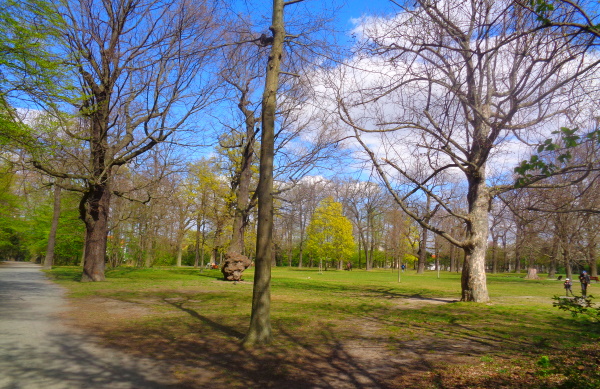
Hasenheide offers room to breathe close to densely built neighbourhoods. Broad paths and lawns make it suitable for a break after the streets around Hermannplatz or a visit to Bergmannstraße. Unlike Viktoriapark, it does not revolve around one waterfall and viewpoint. Its appeal lies in everyday park life: people walk, play, exercise and meet friends. The atmosphere varies with season and time of day.
Visitors who have only a short Berlin trip may prefer a park nearer their other sights. But Hasenheide is worthwhile if you want to explore southern inner-city neighbourhoods or attend its summer cinema. It can be paired with the former airport grounds at Tempelhofer Feld, which are much more open and exposed. The two green spaces offer a useful contrast within one outing.
The Jahn monument and the park’s history
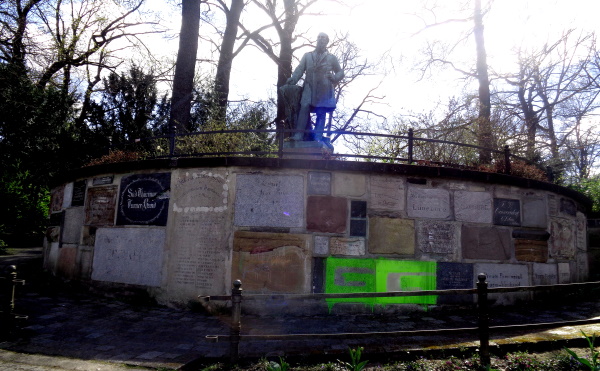
Friedrich Ludwig Jahn is associated with the development of the German gymnastics movement, and a monument to him stands in Hasenheide. Exercise activities took place in this area in the early nineteenth century. The memorial provides a historical point of interest on an otherwise casual walk. Jahn’s legacy and nationalism are complex, so it is worth reading interpretation rather than treating the monument solely as a decorative landmark.
Stay near Neukölln and Kreuzberg
Compare transport links and the character of the surrounding streets when choosing a base. Mitte is easier for classic sights; southern neighbourhoods suit local park and food outings.
The park changed substantially over time. Parts were landscaped in the twentieth century, and postwar rubble contributed to a raised area within the grounds. Like many Berlin green spaces, Hasenheide has layers of urban and social history beneath its paths. A brief stop at the monument and the hill helps you see that it is not simply an empty lawn inserted into the city.
Do not confuse the Jahn monument with a museum that has set opening times. It is part of the park landscape. If you want a deeper account of the gymnastics movement or the postwar rebuilding of Berlin, look for dedicated historical resources before or after your walk.
Paths, lawns and playgrounds
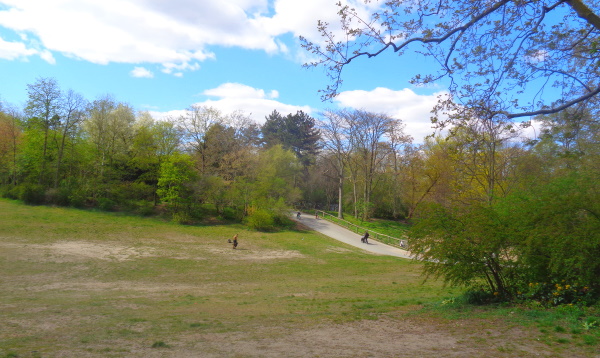
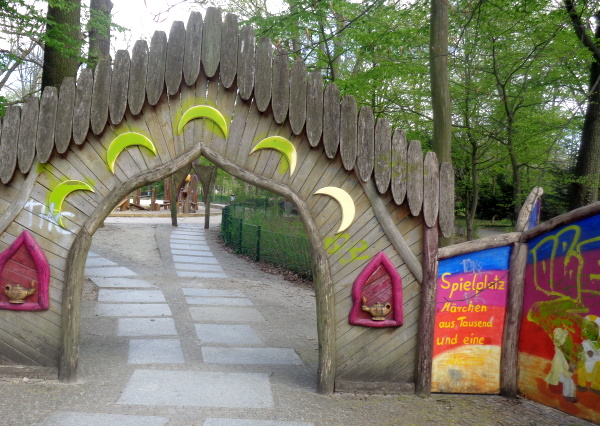
The park has routes suitable for a short circuit or a more leisurely stroll. Trees provide shade on warm days, while open lawns offer places to sit. Pick a loop based on the entrance you use rather than trying to see every path. If you are with children, locate a playground in advance and allow time for it; a family visit naturally runs longer than a sightseeing walk between monuments.
Keep shared paths clear and follow posted cycling rules. On busy afternoons, walkers, runners and families move at different speeds. A picnic is easy to arrange, but bring a bag for litter and respect planted areas. Public facilities and food options can change by season, so it helps to bring water rather than rely on a particular kiosk being open.
Some parts of Hasenheide feel more secluded than others. For a first visit, daylight and the busier main paths make orientation simpler. If a part of the park feels uncomfortable, choose another route; there is no reason to complete a predetermined loop. This is practical advice for an urban park, not a reason to avoid it altogether.
Animals and other small attractions
Hasenheide has a small animal area that is especially interesting to families. It is different from Tierpark Berlin, a large zoological park requiring a ticket and much more time. Check the current rules for viewing or contact with animals; a former description of a petting zoo may not reflect today’s arrangements. Keep children from feeding animals unless signs explicitly permit it.
The park also contains mature trees and smaller monuments that can be noticed without a formal trail. A visit can be as simple as a walk from one entrance to another with a pause on the lawn. If you enjoy identifying trees or birds, bring a small field guide or use an app without disturbing wildlife. These details are often more rewarding than looking for a single “top sight.”
Open-air cinema in summer
The Freiluftkino Hasenheide is a popular seasonal open-air cinema. Its programme varies, with films often shown on summer evenings. Check the official schedule, film language, subtitles, start time and ticketing before going. A warm afternoon does not guarantee a warm late-night seat, so take an extra layer. Rain policies and seating arrangements are set by the cinema operator.
Going to a film changes the visit: arrive early enough to find the entrance and settle in, and plan your route home after dark. If you mainly want a quiet park walk, choose another time. A cinema evening can be combined with dinner in Neukölln or Kreuzberg, but leave enough time between the meal and screening. Check whether outside food is allowed rather than assuming picnic rules for the park apply inside the venue.
Is Hasenheide safe to visit?
Hasenheide has had a long-running public discussion about drug dealing and security. Conditions can vary by area and time. Most visitors use the park for ordinary recreation, but it is sensible to stay on well-used paths, keep valuables secure and avoid isolated routes at night. Do not buy or engage with illegal activity. If you want a family playground visit, choose daylight and an entrance near your intended destination.
Neither sensational descriptions nor blanket assurances help a visitor plan. Look at recent local information if a specific evening event is involved, travel with someone if that makes you more comfortable and use the direct public transport route back. In an emergency, contact the appropriate authorities. This approach lets you enjoy the park while taking its urban setting seriously.
How to get there
Hasenheide borders several neighbourhood streets. Hermannplatz is a major public transport hub near the eastern side; other U-Bahn and bus stops may be more convenient for a particular entrance. Use a live route planner and set your destination to the cinema, Jahn monument or playground if that is the goal. The park is large enough that entering on the wrong side can add a long walk.
From Berlin Central Station or Museum Island, allow time for a transfer. From Bergmannstraße or parts of Kreuzberg, walking can be pleasant. A car is unnecessary for most visitors and parking in the surrounding streets may be inconvenient. If you cycle, check which paths allow riding and secure the bicycle responsibly.
Combining Hasenheide with nearby places
Tempelhofer Feld lies nearby and is the natural second green space for a longer day. The former airport’s open runways and horizon are a sharp contrast with Hasenheide’s trees. Bergmannstraße offers restaurants and the Marheineke market hall farther west. A short route through both park and streets provides a more varied picture of southern central Berlin than either place alone.
Viktoriapark is another option if you want a compact hillside walk. Tiergarten is larger and closer to the government quarter, while Mauerpark is best known for its Sunday activities. Choose by neighbourhood and the kind of outing you want rather than treating Berlin parks as interchangeable.
Activities to add to your Berlin trip
Hasenheide itself needs no ticket. For a guided activity or boat tour elsewhere in the city, compare current offers and departure points.
Browse Berlin tickets and activities at Tiqets · Compare Berlin Spree sightseeing cruises at Tiqets Check the departure pier, duration, route and commentary language in the selected offer.
When to go and how long to stay
Spring through early autumn is most comfortable for a longer walk or picnic. Summer evenings bring the cinema and more social activity. Autumn can be attractive under the trees; in winter, shorter daylight and fewer seasonal services make a focused daytime walk more sensible. On hot days, shade is useful, but the most popular lawns may be busy. Weather and your purpose matter more than a single “best month.”
An hour is enough for a basic walk and the Jahn monument. Allow two hours with a playground or café stop, and an entire evening for a film. If you intend to combine Tempelhofer Feld, plan a half-day and include a break. A route that looks short on a city map can feel long when you have crossed two large parks.
Accessible and family-friendly planning
Main paths are easier than informal tracks, but conditions can change after rain or maintenance. Check the specific cinema or animal-area accessibility separately. Families should agree on a meeting point in case the group splits across play areas. Dogs and cyclists should follow current park signs, and everyone should leave wildlife and planted spaces undisturbed. For a calmer visit with younger children, a weekday morning may be preferable to a busy summer evening.
If someone in your group cannot walk far, choose an entrance close to one intended feature rather than a full circuit. There is no admission requirement that forces you to cross the whole park. A bench and a short shaded route may be enough to make the stop worthwhile.
Stay near Neukölln and Kreuzberg
Compare transport links and the character of the surrounding streets when choosing a base. Mitte is easier for classic sights; southern neighbourhoods suit local park and food outings.
A route from Bergmannstraße to Tempelhofer Feld
Start with a morning around Bergmannstraße and its market hall, then walk towards Hasenheide for a shaded break. Enter the park from the side that best fits your route and make a modest loop through the main paths. If the group still has energy, continue towards Tempelhofer Feld. The transition is striking: enclosed woodland and lawns give way to an enormous open former airfield. In summer, carry water because the second part offers much less shade.
There is no need to cross every corner of both parks. Decide in advance whether the Jahn monument, a playground, the cinema or the airfield is the main aim. A family with young children may prefer the park and a nearby meal; cyclists may enjoy the large paved routes of Tempelhofer Feld. Use public transport from your final stop instead of returning to your starting entrance solely to collect a car.
Understanding the park’s changing reputation
News reports often focus on a single problem area or incident. That can influence how travellers view the whole park, while residents also know it as a place of daily exercise, recreation and culture. Both observations can be true. A travel guide should explain specific conditions and practical choices rather than label every visitor experience the same. Daylight, a clear route and attention to your surroundings are reasonable; an exaggerated claim that the entire space is either unsafe or carefree is not.
Conditions may change after local policing or landscaping decisions. If a specific concern affects your plans, seek recent local notices. Visitors should also avoid taking photographs of people in sensitive situations. Enjoying a public park does not require treating residents or social problems as tourist attractions.
Small details to notice on a walk
The park’s tree cover creates pockets of shade and a different soundscape from surrounding roads. Listen for birds, observe how open lawns and winding paths change the view and notice the memorials rather than walking straight through. In spring, new foliage and flowers can make the routes feel fresh; in autumn, the canopy gives colour and fallen leaves can make paths slippery. A modest 30-minute walk can be rewarding when you pay attention to these details.
Hasenheide also works as a place to pause between more demanding activities. If you have spent a morning in a museum or travelling across Berlin, sit down rather than rushing to another ticketed stop. Conversely, a rainy day with muddy paths may be better used in an indoor attraction. The park is flexible; it does not need a rigid itinerary.
Frequently asked questions
Does Hasenheide have an entrance fee?
No. The public park is free. The open-air cinema and other organised events can have separate tickets.
Is it suitable for children?
Yes, families use its paths and playgrounds. Choose a suitable daylight route and check current animal-area rules.
How does it compare with Tempelhofer Feld?
Hasenheide is a tree-filled traditional park. Tempelhofer Feld is a much more open former airfield; both can be visited on one outing.
When does the outdoor cinema run?
It is seasonal. Check the current programme, language and booking details with the cinema operator.
1 thought on “Hasenheide (Park Berlin)”